Real-time audio monitoring and voice communication
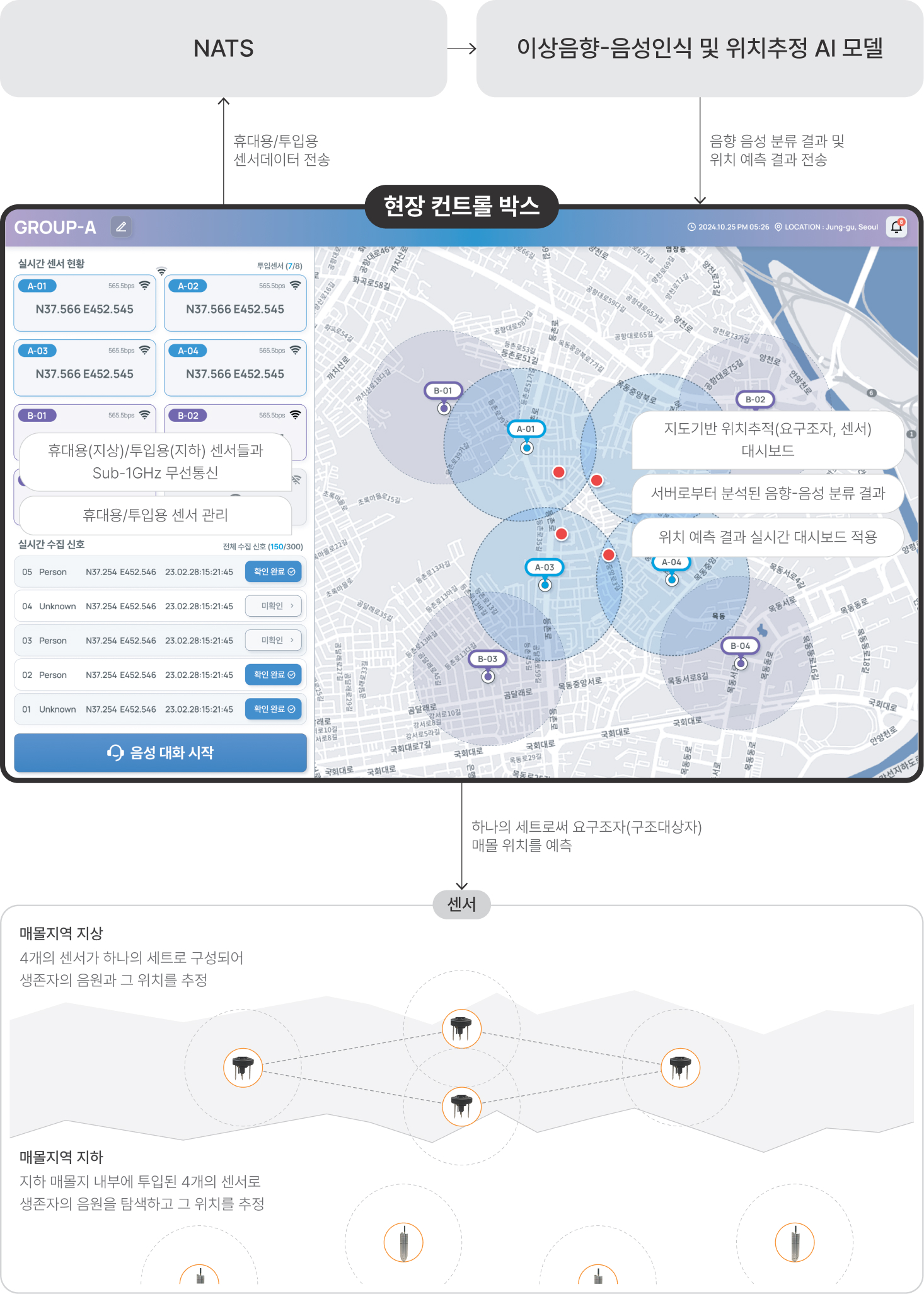
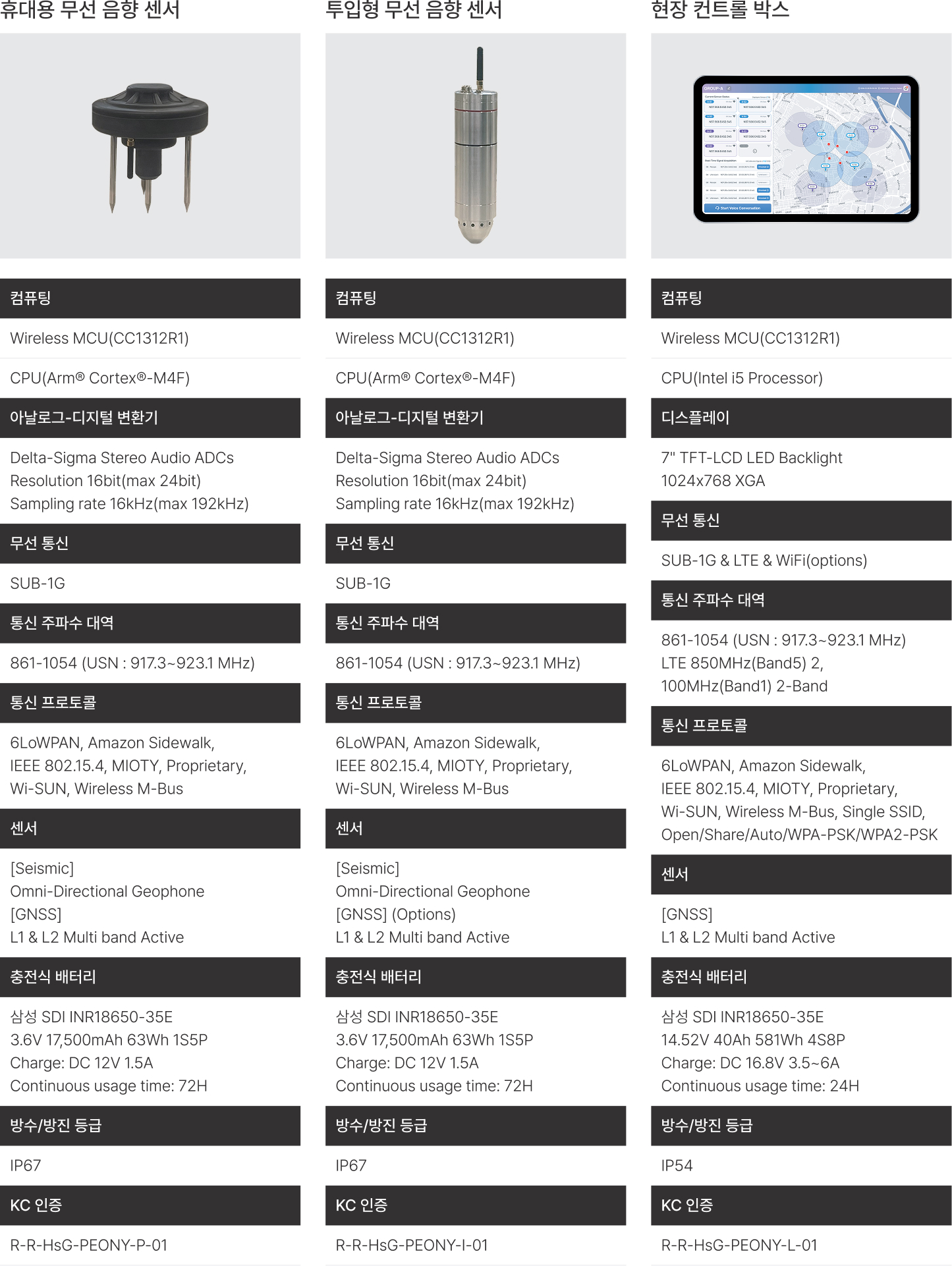
Rescue teams can listen to sounds from the entrapment site via a headset and communicate directly with survivors near the sensors.
Supports survivor search and rescue operations.
Intelligent wireless acoustic sensors and AI support survivor search and rescue operations at disaster sites.
Rescue teams can listen to sounds from the entrapment site via a headset and communicate directly with survivors near the sensors.
Rescuers can locate and rescue trapped victims based on position information identified through multi-sensor acoustics and AI analysis.
AI analyzes and integrates distributed sensor signals so operators can monitor locations in real time.
Sensors deployed at the incident site collect sounds and vibrations generated beneath debris.
Demonstrates how to use the acoustic sensors and the terminal device through real on-site scenarios.
Abnormal sound and voice detection and localization technology
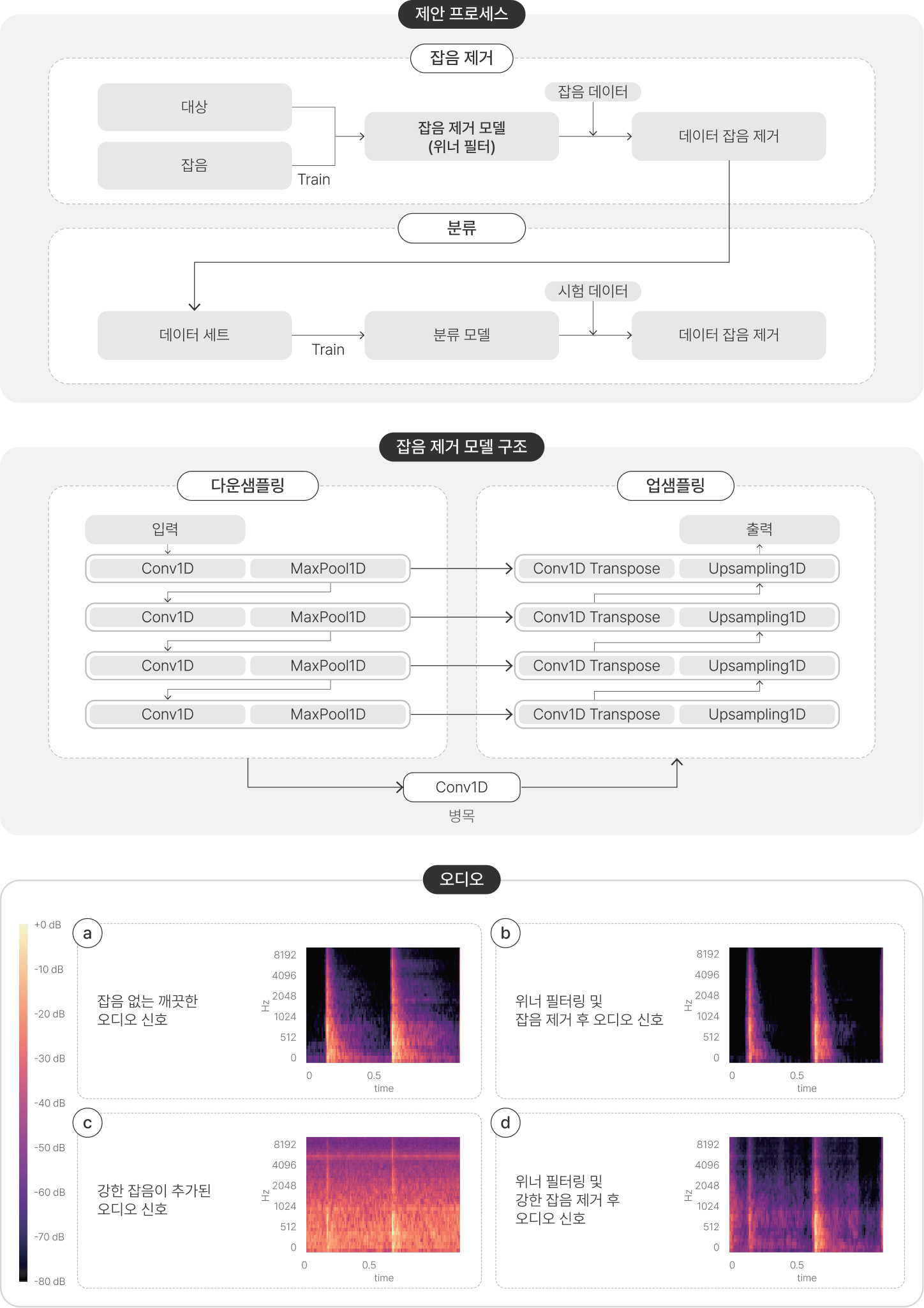
AI-based acoustic analysis and sensor data detect survivor signals and estimate their location.
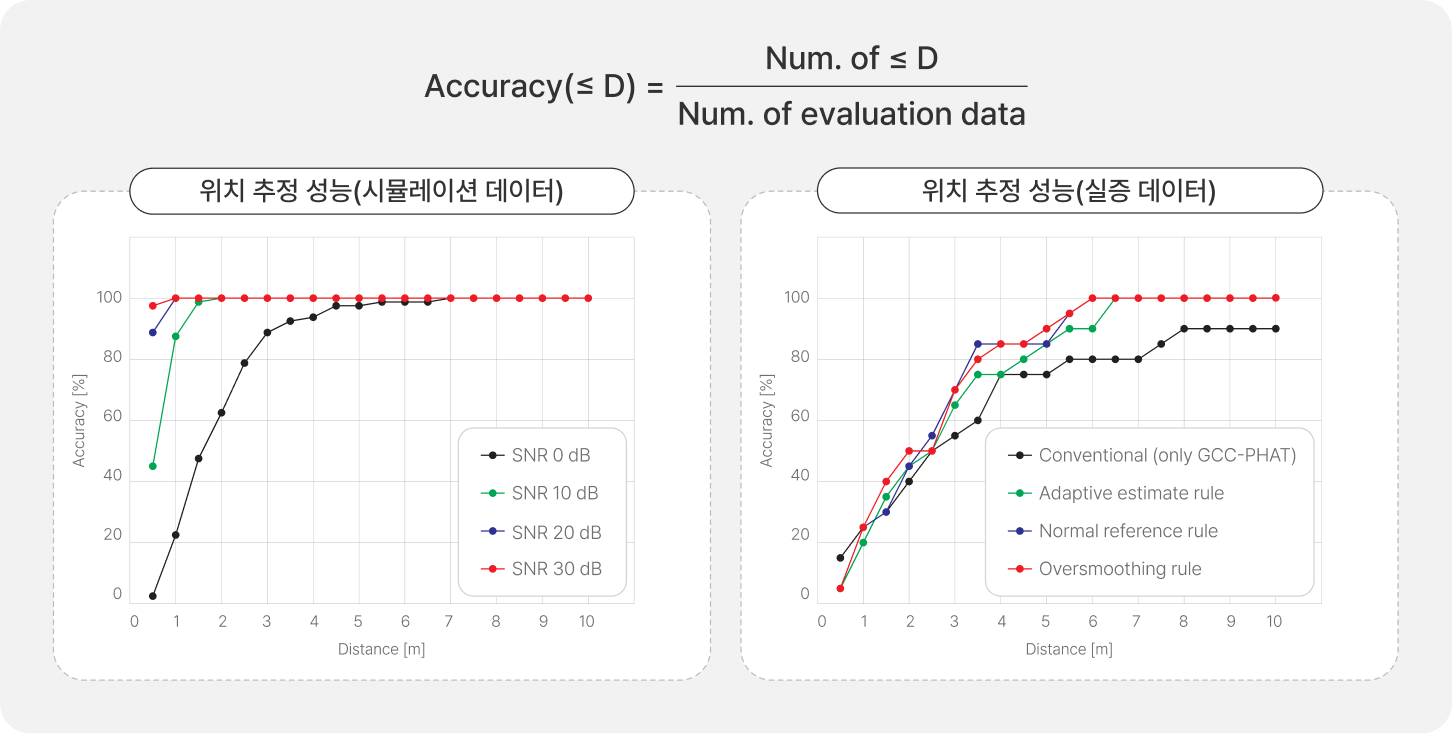
We are validating and improving the localization model through ongoing field verification tests.
- Experiment: Sound source localization using simulation and field-verification datasets
- Experiment: Data is downsampled to 8,000 Hz
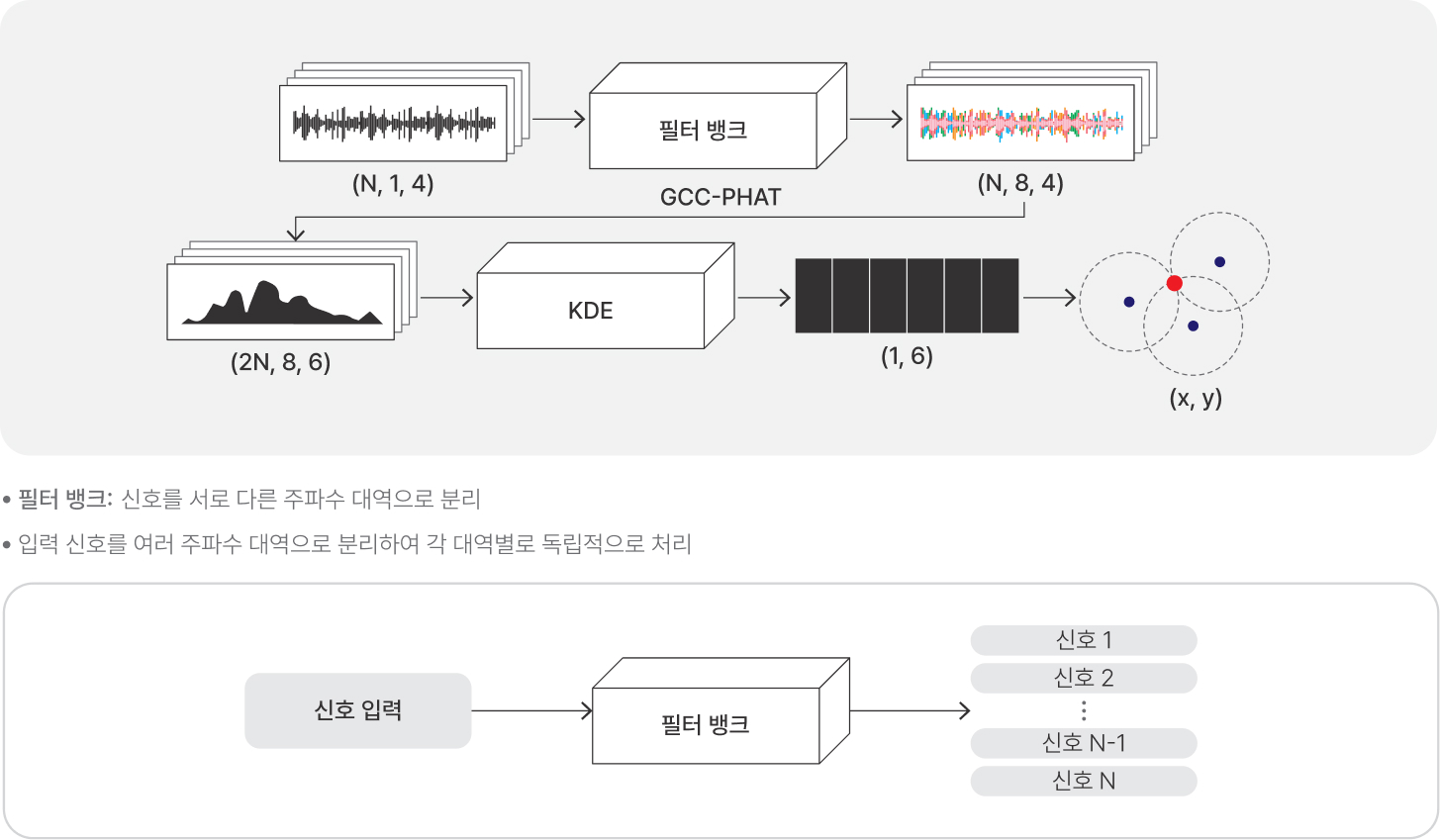
- Step 1.Separate signals using a filter bank
- Step 2.Estimate the GCC-PHAT PDF using Kernel Density Estimation (KDE)
- Step 3.Generate hyperbolic curves based on TDOA
- Step 4.Estimate the optimal coordinates